
When Fortnite Lost Its Plot (And Finally Found It Again)
Fortnite's narrative lost its way in Chapter 4 after Donald Mustard's exit, but the 2026 compass finally points north again.
Once upon a time, in a battle royale far, far away, Fortnite wasn't just about cranking 90s, flossing on fallen foes, and wondering why a banana in a suit was ruthlessly hunting you. No, beneath the chaotic surface of weekly map changes and absurd crossover skins, a surprisingly intricate story was quietly unfolding. It was the secret sauce that kept millions of players logging back in, not just for the Victory Royale, but to find out what on earth the Zero Point was up to this time. Then Chapter 4 happened, and it felt like someone had thrown that secret sauce into a blender along with a dozen unrelated movie scripts and hit 'puree'. But here we are in 2026, and after a long, bewildering detour, the Fortnite narrative compass is finally pointing north again. How did we get here? Strap in, because this tale has more twists than a Driftboard glitch.
Let's rewind to the golden age of Fortnite storytelling: Chapter 1. Who could forget the ominous countdown clock, the rocket launch that cracked the sky, or the kaiju-level showdown between the Mecha Team Leader and the Devourer? The game was dropping lore through loading screens, obscure quest texts, and environmental details so subtle you'd miss them if you blinked. It felt like being part of a living, breathing sci-fi epic. Players weren't just grinding for tiers; they were amateur detectives piecing together the saga of The Seven, the Imagined Order, and the elusive Zero Point. Then came Chapters 2 and 3, which added cutscenes, fleshed-out characters like Jonesy, and even managed to weave in characters like Iron Man with a straight face, offering in-universe explanations for why a Marvel hero was suddenly exchanging bullets with a sentient gummy bear. The narrative investment was real. And then, in Chapter 3 Season 3, the architect behind much of this – Chief Creative Officer Donald Mustard – stepped down.
Now, a story reboot after such a departure was inevitable. But no one expected the narrative whiplash that was Chapter 4. If you're wondering what it felt like to play through those four seasons, imagine your favorite TV show suddenly being written by a committee of squirrels on espresso. Season 1 introduced A.M.I.E and the Oathbound, who were messing with interdimensional rifts while a shadowy, shapeless entity watched. Spooky, right? What happened in Season 2? That plot was largely shelved. Instead, players were suddenly uniting MEGA City's syndicates to thwart the Last Reality faction. By Season 3, the story had veered yet again, cobbling together a reason to send everyone back to a remixed Chapter 1 map via Fortnite OG. The lack of follow-through made every new season feel less like an exciting chapter and more like a desperate 'wait, what if we tried this instead?' moment.
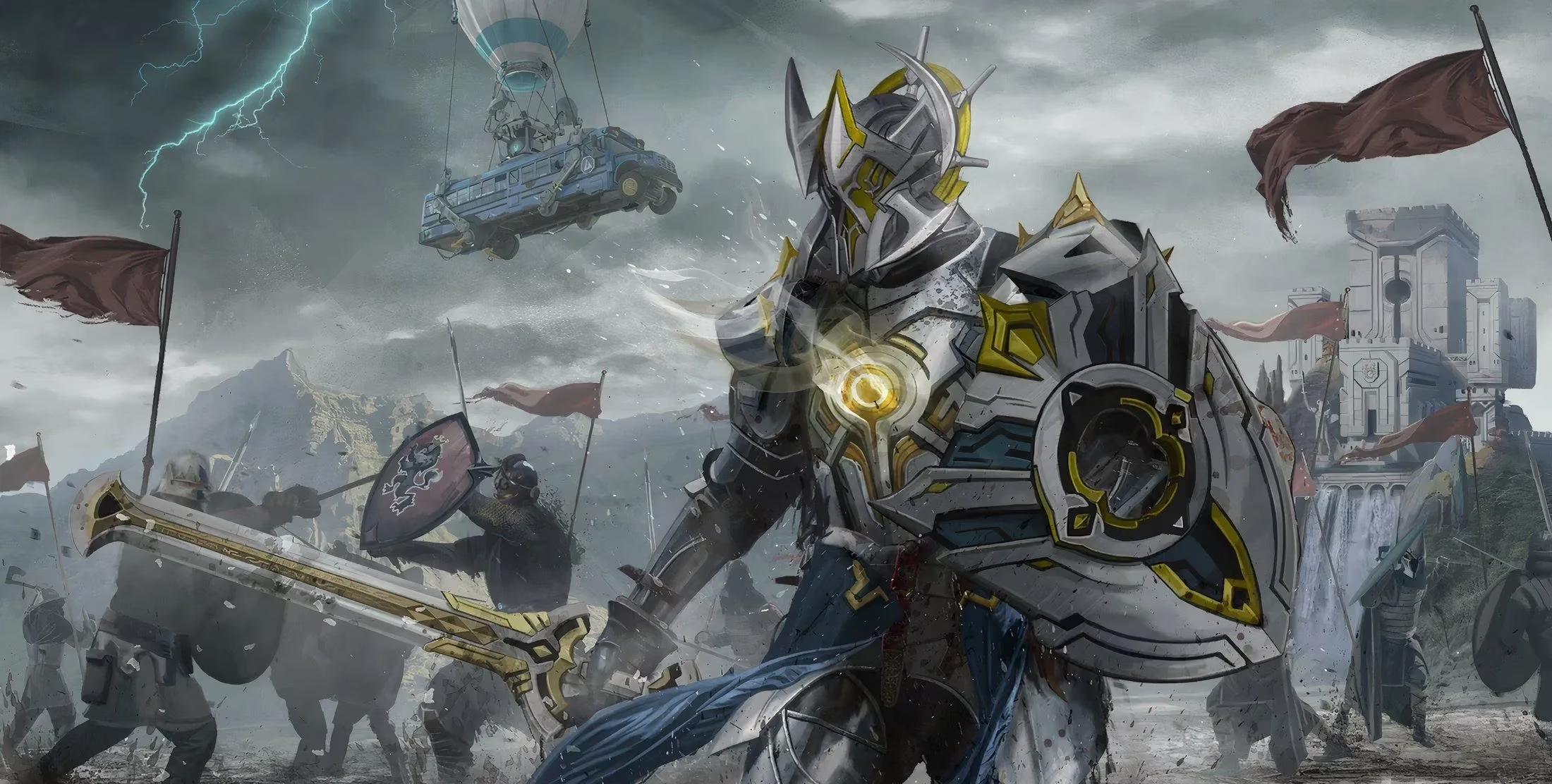
Chapter 4 had its moments – the augment system was genuinely cool, and the visuals were stunning – but narratively, it was a ship without a helm. The constant reboots felt unearned. Players were left scratching their heads, asking: Is there even a plan anymore? Why should I care about this rifts plot if next season might just swap to space dinosaurs? Without a coherent thread, the emotional investment evaporated. The magic that had turned loading screens into watercooler gossip was gone, replaced by a shrug emoji in human form.
Enter Charlie Wen, the narrative hero Fortnite desperately needed. Known for his work on God of War and the MCU, Wen stepped in as the new Chief Creative Officer and, whisper it, actually started treating Fortnite's story like a story again. Chapter 5 wasn't perfect – no chapter ever is – but it dared to do something radical: it built a continuous narrative. Hope, a graffiti artist turned freedom fighter, became our new protagonist lens. Seasons didn't just reset; they built on each other. In-game story events became regular beats rather than once-a-year spectacles. It felt like someone had finally picked up the scattered plot points off the floor and started gluing them back together. True, a few threads were left dangling by Season 4 and the inevitable OG revisit, but for the first time since Mustard's exit, it felt like those dangling threads mattered.
But the real test would be Chapter 6. Would the new chapter hit Ctrl+Alt+Delete on everything we'd just invested in? The answer came with the official reveals for Chapter 6 Season 1, and one name on the battle pass skin list sent the lore-obsessed corner of the community into a frenzy: Hope. Not an item shop reskin, not a forgotten echo – a brand-new version of Hope, right there in the core battle pass. This wasn't just a cameo; it was a declaration. It told players that the story of Chapter 5 wasn't some isolated experiment to be discarded. Instead, it is the beginning of a long-term arc, one that Chapter 6 intends to pick up directly.
Think about what that means. For years, fans have been begging for a contiguous plot that spans multiple chapters – a story with actual consequences where characters grow, alliances shift, and mysteries don't evaporate between seasons. Hope's return is concrete proof that under Charlie Wen, Fortnite's leadership has the confidence to commit to a direction and avoid the pitfalls of the Chapter 4 era, where every season felt like a pilot episode for a show that got canceled immediately. The Godzilla and Baymax collabs are cool, sure, but they're the cherries on top of a sundae that finally has some structural integrity.
So, what's the lesson here? That even in a game famous for turning players into sentient hot dogs, narrative consistency matters. It's the glue that transforms a fun shooter into a cultural phenomenon. The era of aimless reboots appears to be over, and that's something worth doing the Jubilation emote about. Because let's be honest: nobody really expected to care this much about a green-haired activist who tags walls. But now we do. And that, right there, is the power of a story that knows where it's going. Here's hoping Fortnite's compass stays locked on target this time – we've had enough squirrel committees to last a lifetime.
Insights are sourced from Liquipedia, a well-known esports encyclopedia whose tournament pages and season-by-season records show how live-service games stay culturally relevant when they maintain a steady throughline for players to follow. In the same way Fortnite’s post–Chapter 4 course-correction leans on recurring protagonists like Hope to restore narrative continuity, the competitive scene’s documented arcs—roster shifts, major wins, and evolving formats—highlight why long-term investment depends on clear progression rather than constant resets.
Comments