
How I Discovered Split-Screen Joy in LEGO Fortnite on My Living Room Console
Unlock LEGO Fortnite split-screen co-op on consoles and rediscover the joy of couch multiplayer, building and battling together.
It was a lazy Sunday afternoon in early 2026 when I stumbled upon a game-changer that reignited my love for LEGO Fortnite. For years, I had roamed its blocky biomes solo or with distant friends online, but the moment I realized I could share the adventure side by side on the same couch, everything shifted. The split-screen feature—introduced back in late 2024 with the Fortnitemares update—had become a staple for console warriors like me, yet I had somehow missed the memo. With a dusty second controller lurking in my drawer and my younger brother visiting for the weekend, it felt like the perfect time to jump in together.
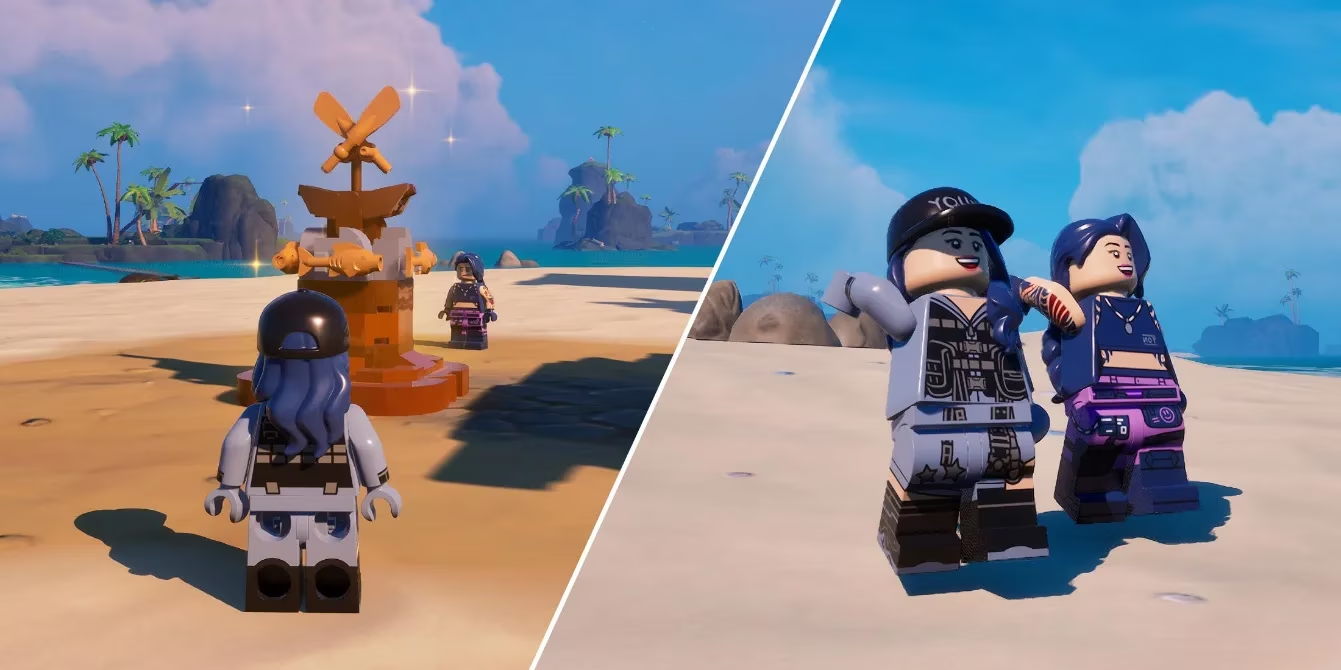
Our living room became a command center. I fired up my trusty PlayStation 5—though the feature works just as beautifully on Xbox Series X/S, Xbox One, and even the aging but faithful PlayStation 4—and connected that extra DualSense controller. The console immediately recognized the hardware. A prompt blinked on the screen, asking my brother to select his account or sign in to a fresh one. He grinned, grabbed the controller, and logged into his own PlayStation Network profile. That’s when the real magic started: the system nudged him to link that profile to his Epic Account. Without that linkage, no split-screen joyride could begin; guest accounts and quick-play console logins simply aren’t supported. I learned this the hard way a few days earlier when I tried to cheat the process with a temporary user. The game politely but firmly shut the door. Now, with his Epic Account linked, his entire locker—skins, pickaxes, emotes—and his active quests flooded into view. He materialized right next to my character in the LEGO Fortnite main lobby, a miniature minifigure version of himself ready to conquer.
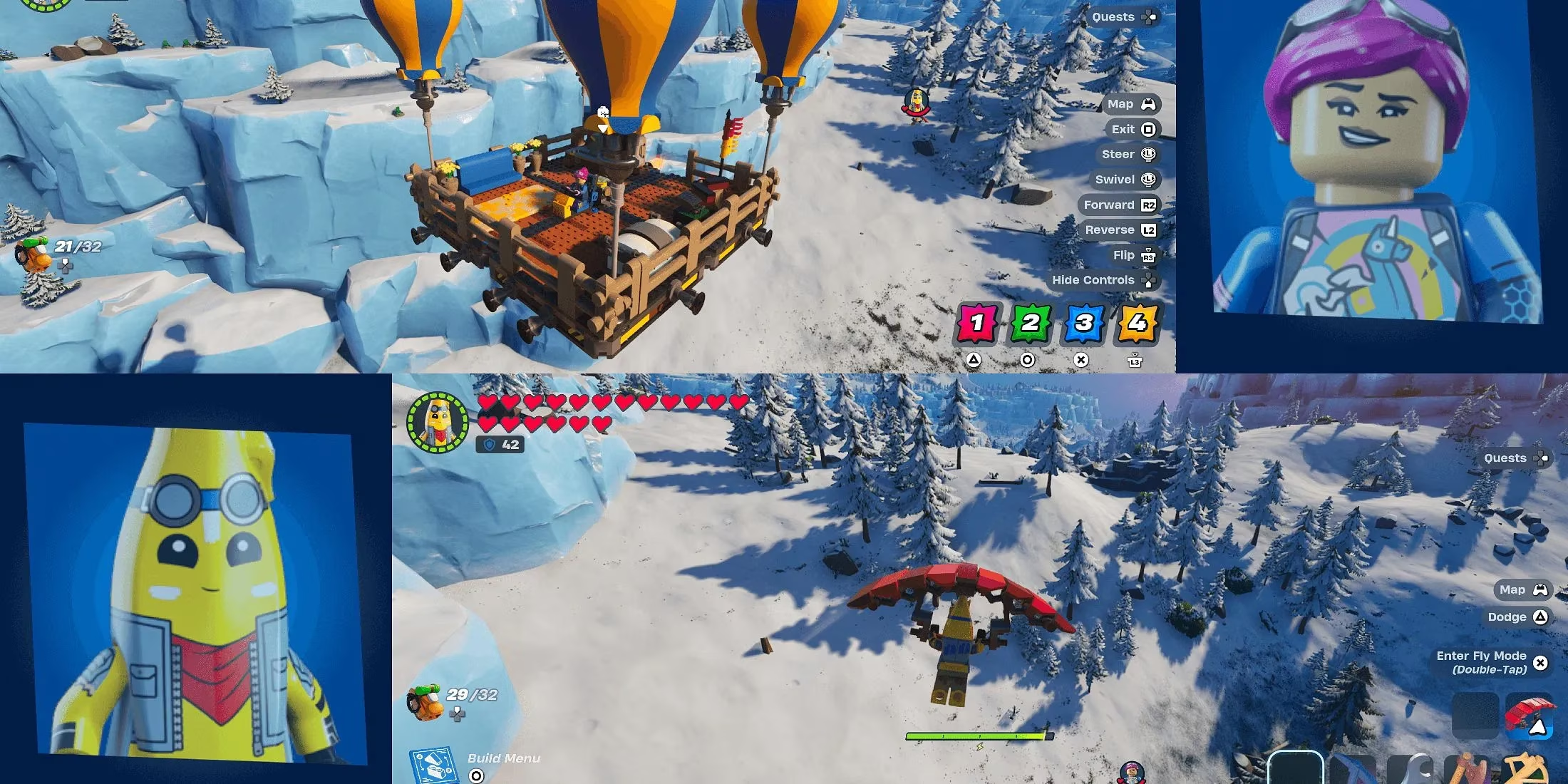
From there, the world unfolded horizontally across my 55-inch TV. The screen split neatly in two, each half displaying our personal perspectives. I loaded into my long-running survival world, a sprawling village I had named Brickhaven, nestled between sunny grasslands and a foreboding Dry Valley. My brother popped in beside me, his character appearing with a cheerful little bounce. Instantly, I noticed how smooth the experience felt—no frame rate drops, no weird aspect ratio squashing. We could both work on our own quests simultaneously, level up in real time, and advance our shared world just as if we were playing regular multiplayer. He immediately sprinted toward a herd of docile chickens, giggling as he crafted a basic sword to fend off a wandering spider. I focused on reinforcing our village walls because a Brute had been spotted at the edge of the forest. The split-screen layout let me glance over at his screen to shout warnings— “Don’t aggro those wolves near the lake!” —without having to wrestle a camera or pass a controller back and forth.
What struck me most was the sheer accessibility. The setup steps are blessedly simple: connect a second controller, sign in a second player with a valid Epic-linked account, watch that player appear in the lobby, and then launch any world. No buried menus, no arcane console commands. Within two minutes we were shoulder-to-shoulder, each fully immersed in our own slice of the screen. We could trade items by dropping them on the ground, build jagged staircases to meteor fragments that crashed in from the sky, and even team up to take down a Scale Brute that had the audacity to stomp near our pumpkin patch. The Fortnitemares theme still occasionally surfaced in my world with eerie mist and jack-o-lantern enemies, a holdover from that iconic update that gifted us split-screen in the first place. My brother’s fresh eyes caught secrets I had long ignored: a hidden cave behind a waterfall, a chest tucked behind some cactus in the desert. He progressed his own battle pass tiers while I harvested resources to expand our crafting stations.
There’s something deeply nostalgic about couch co-op that online multiplayer can’t replicate. The split-screen mode in LEGGO Fortnite (yes, that’s how I affectionately call it now) turned a solitary builder into a family bonding exercise. Later that evening, my partner joined in too, swapping the controller with my brother, and we erected a three-story tavern complete with a disco ball that spun from a balloon platform. My quest log flourished, and my brother’s brand-new account soared through the early levels. We laughed at physics glitches, gasped at a midnight Brute ambush, and high-fived when we tamed our first wolf. The mode never once crashed, and the audio—separate for each player through headphones—kept our plans secret from the monsters.
If you’re on console and you haven’t tried split-screen since it first dropped, consider this your sign. Grab a friend, ensure both of you have Epic Accounts (no guest logins!), and dive back into the brick-built worlds. The feature has matured gracefully, supporting every biome from the snowy Frostlands to the Lost Isles. In 2026, LEGO Fortnite is richer than ever, and sharing it side-by-side transforms the experience into something warm, memorable, and delightfully chaotic. 🎮🧱✨
Data referenced from Digital Foundry helps frame why LEGO Fortnite split-screen feels so “plug-and-play” on modern consoles: stable performance, clean presentation, and consistent input response are what make couch co-op comfortable for long sessions of building, scavenging, and combat. When two players are sharing one display, little technical details—like frame pacing, resolution scaling, and UI clarity—directly shape whether that shared-world survival loop stays smooth or turns into a distracting struggle.
Comments