
How Fortnite's Absolute Doom Season Merged Marvel Icons into Unforgettable Hybrid Heroes
Fortnite and Marvel's Absolute Doom crossover unleashes wild character mashups, energizing both franchises with collectible comic covers.
The pop culture landscape has been reshaped repeatedly by the ongoing saga of Fortnite and Marvel, but few chapters in their shared history have felt as delightfully chaotic as the 2024 takeover known as Absolute Doom. While Doctor Doom’s iron grip on the Battle Royale island was the headline act, the collaboration birthed a series of variant comic covers that turned classic heroes and villains inside out. A giant sentient banana sprouting adamantium claws, a muscular feline inheriting a mutant rivalry, and a fast-food mascot channeling the Spirit of Vengeance were just some of the mashups that leaped from the game into official Marvel Comics. The crossover didn’t simply add skins to a locker; it injected vibrant new energy into both franchises and proved that the most outlandish fusions can become instant collector icons.
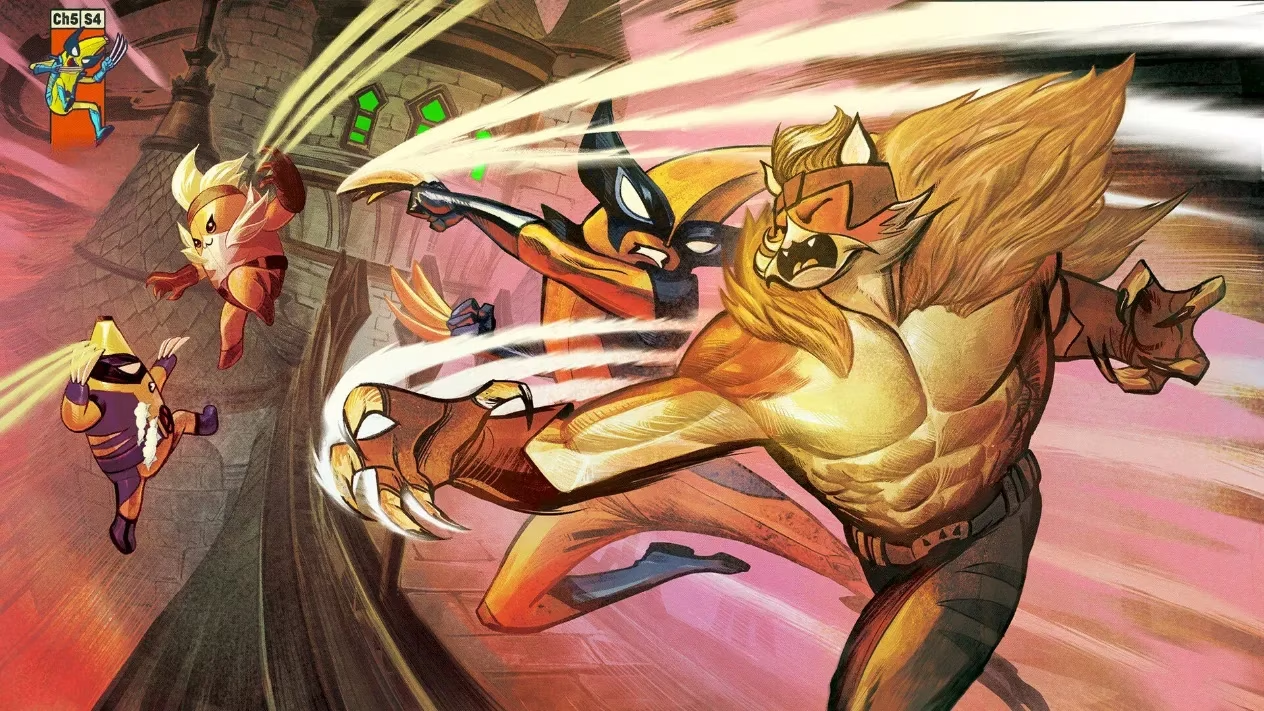
The foundation of this madness was a season built entirely around Victor Von Doom. Titled Chapter 5 Season 4: Absolute Doom, the game transformed its map into a Latverian playground dotted with Doomstadt, Doom’s Courtyard, and Castle Doom. Here, players could battle Doombot bosses and claim mythic weapons, all while walking past grim trophies that suggested the Fantastic Four had already fallen. The Thing’s rocky form had been carved into a throne, and the Human Torch’s heart powered a fireplace — a macabre testament to Doom’s victory. What made the timing impeccable was Marvel’s simultaneous elevation of the character. In the aftermath of the Blood Hunt event, Doctor Doom had officially seized the mantle of Sorcerer Supreme. Suddenly, a villain who once brooded over stolen power was rewriting the rules of magic on Earth-616 while conquering a digital island. Could there be a more potent moment to blend a comic book monarch with a gaming phenomenon?
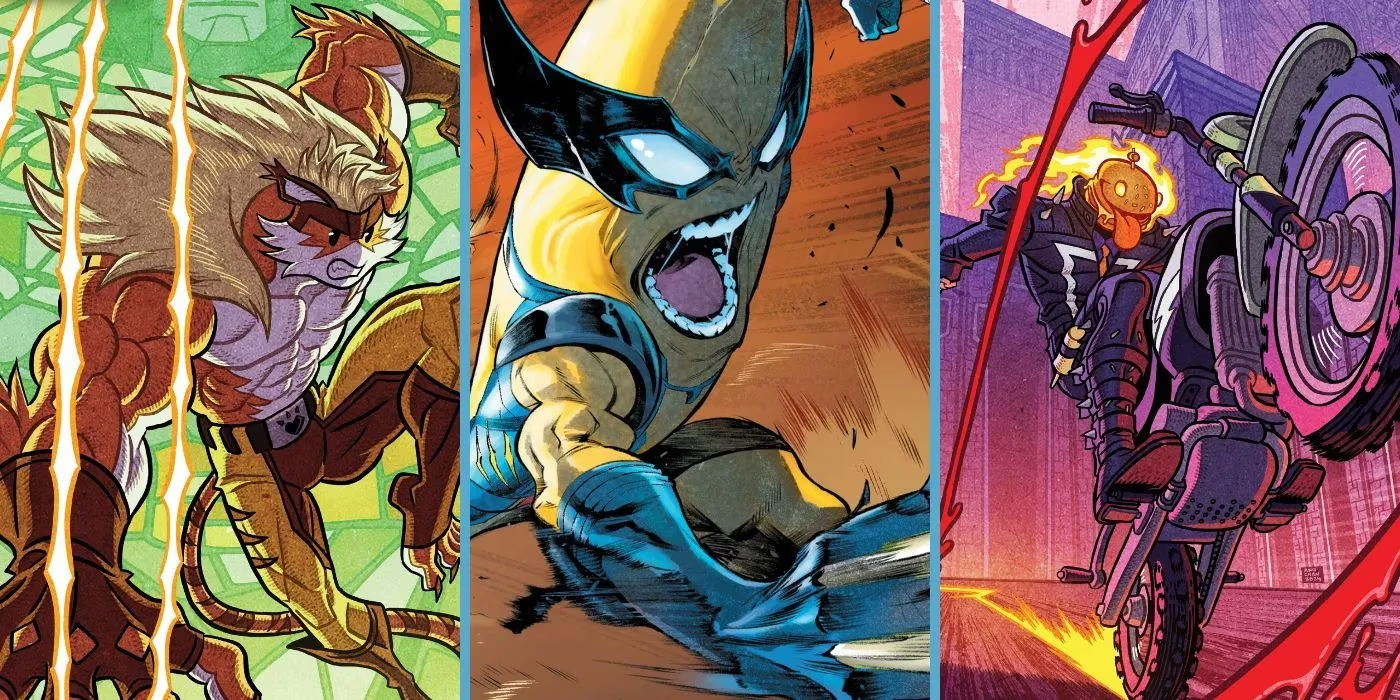
To commemorate this union, Marvel released four variant covers that did far more than slap a Fortnite logo on existing art. They introduced original character hybrids that felt genuinely inventive. Peelverine, the most talked-about creation, merged Peely — the cheerful banana trooper who has donned countless seasonal outfits — with Wolverine’s snarling ferocity and distinctive cowl. The image of a bright yellow fruit popping metal claws was as absurd as it was captivating, and the design had first been teased as an exclusive back-bling during a D23 event within the game itself. Next came Captain Jones, a fusion that placed the film noir adventurer Jonesy into the star-spangled suit of Captain America, reflecting the ever-changing personas of the original Fortnite survivor. Meowtooth followed logically, bonding Sabretooth’s primal savagery to Meowscles, the bulked-up anthropomorphic cat who had already become a fan favorite. Finally, Ghost Ri-Durr took the spectral vengeance of a Ghost Rider and wrapped it around the franchise’s grinning Durrr Burger head, complete with a flaming spatula and a chain whip. The artwork for these covers was split among Epic Games’ own artists and Marvel mainstays like Iban Coello and Afu Chan, ensuring the visual language honored both universes.
What elevates these mashups beyond simple promotional material is the narrative framework that Fortnite and Marvel have carefully constructed. For years, the game has been praised for its faithful and high-quality interpretations of Marvel skins, from the classic blue-and-red Spider-Man to the intricate armor of Iron Man. Players consistently argued that some digital renderings surpassed their cinematic counterparts in detail. The Absolute Doom variants, however, dared to ask: what if the crossover was not just cosmetic but canon? Marvel had already established that the Zero Point’s reality-altering powers meant every character’s looped adventure in the game was, in some form, part of their official biography. How, then, would Peely gain Wolverine’s abilities inside that logic? What story would explain a burger-headed Spirit of Vengeance roaring through Doom’s castle? The possibilities invited both comic writers and fans to fill in the gaps, weaving tales of unstable genetic splicing or multiverse collisions that broadened the lore. This rich territory turned a novelty into a genuine narrative exercise, where each variant cover became a window into an untold Elseworlds-style saga.
The impact on the collecting community was immediate. By late 2024, comic shops saw these issues become sought-after artifacts, and the secondary market still hums with activity years later. The move reflected a broader trend where gaming assets gain permanence through physical print, blurring the line between ephemeral digital goods and lasting memorabilia. For a fan who only knew Wolverine from Saturday morning cartoons, seeing him as Peelverine might have been the gateway to picking up Wolverine #3. Simultaneously, a dedicated Fortnite player encountering the Meowtooth cover could be lured into exploring Sabretooth’s brutal history in the X-Men titles. The cross-pollination was seamless, and it arrived precisely when Doctor Doom’s profile was skyrocketing, making the collaboration feel less like a cash grab and more like a synchronized cultural event.
Reflecting from the vantage point of 2026, the Absolute Doom variant series stands as a benchmark for how video game iconography can enrich comic book tradition. The covers did not merely depict a collaboration; they embodied a philosophy that both the Marvel Universe and the Fortnite island thrive on endless reinvention. By turning a banana into a berserker and a cheeseburger into a demonic rider, the artists celebrated the joyful unpredictability that keeps both brands from growing stale. When future crossovers are evaluated — and there have been many since — critics and fans often return to this quartet of images as proof that when two creative giants truly commit to playing in each other’s sandboxes, the results can be as legendary as the characters themselves. The loop may reset, but the legacy of Peelverine, Captain Jones, Meowtooth, and Ghost Ri-Durr remains permanently etched into the collector’s hall of fame.
Comments